

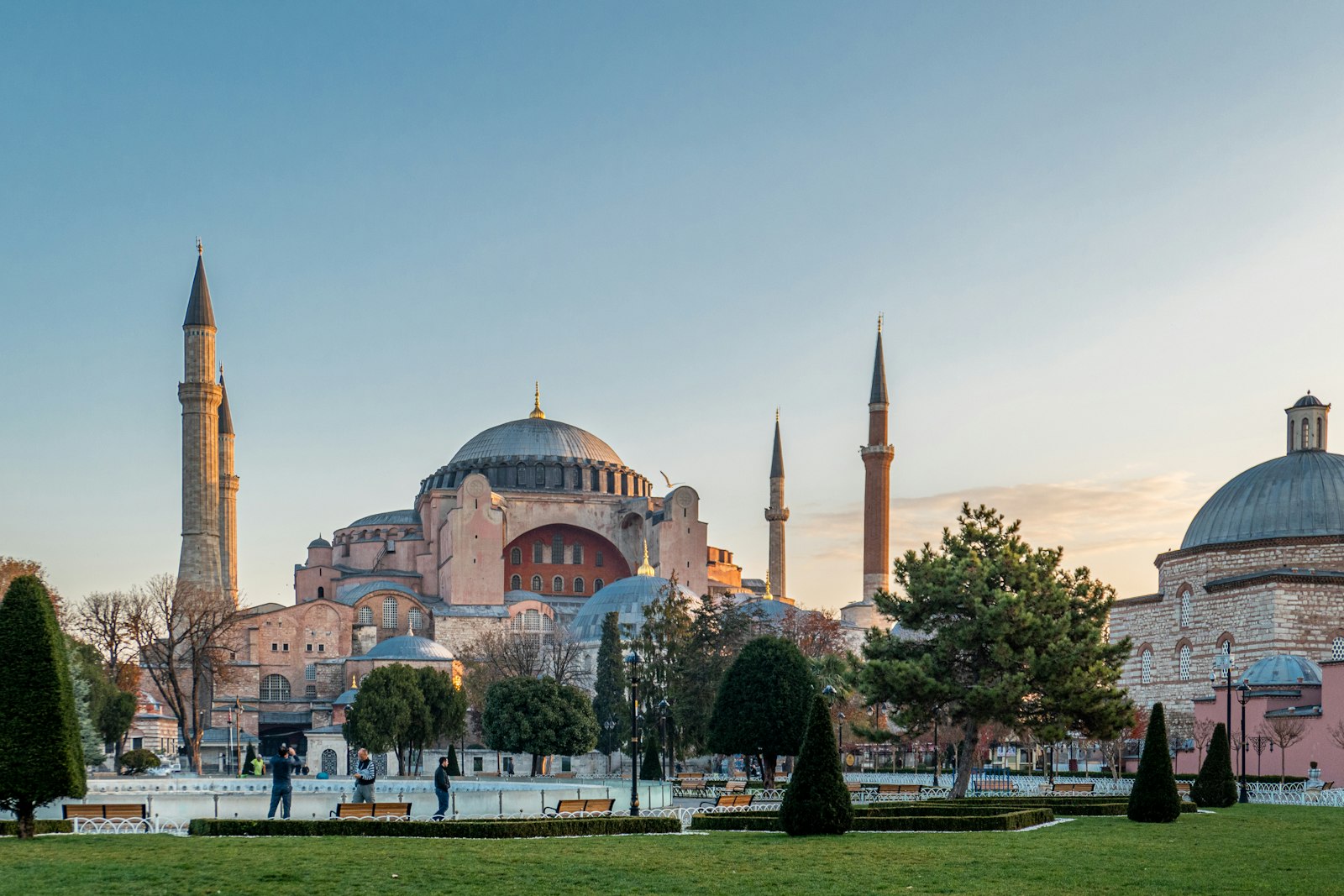
Hagia Sophia is the building that defines Istanbul. For almost 1,500 years it has been a cathedral, an imperial mosque, a museum and, since 2020, a working mosque again, and its giant dome still amazes everyone who walks beneath it. For Jordanian travellers it is one of the easiest world-class sights to reach: a short flight from Amman, and no visa needed.
Hagia Sophia at a glance
| Where | Sultanahmet Square, old city of Istanbul, Türkiye |
| Built | 537 AD, under Byzantine emperor Justinian |
| Entry | €25 for foreign visitors (upper gallery route); free for worshippers on the ground floor |
| Hours | Roughly 9:00–19:30 daily, closed to visitors during Friday midday prayers |
| Time needed | 1 to 1.5 hours |
| Best time | Spring and autumn, first thing in the morning |
Why Hagia Sophia is Türkiye’s must-see sight
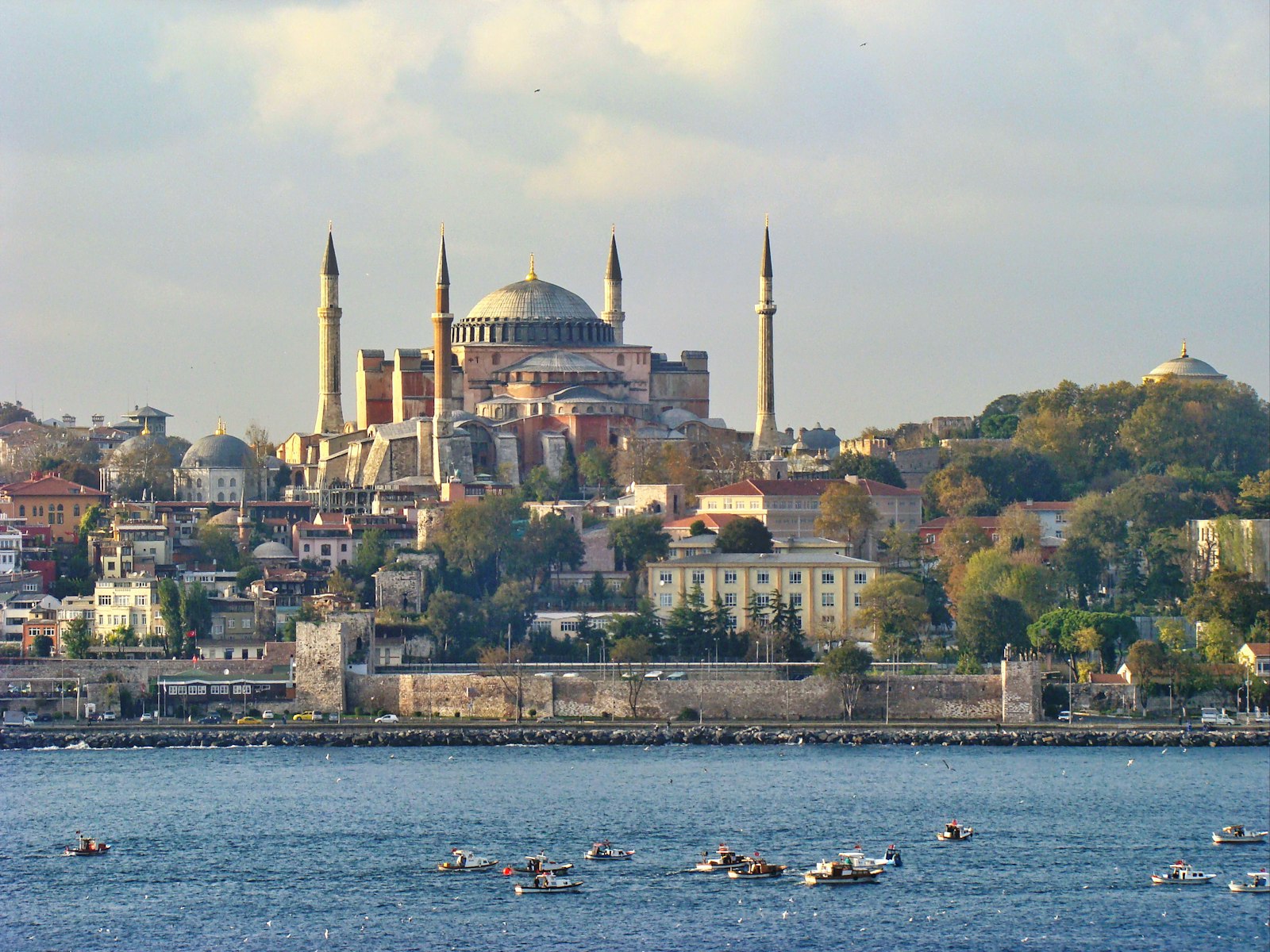
When it was finished in 537, Hagia Sophia had the largest dome in the world, and it kept that title for centuries. Its architects used windows around the base of the dome so that it seems to float on light. After the Ottoman conquest of Constantinople in 1453 it became an imperial mosque; minarets, calligraphy roundels and a mihrab were added, and it inspired the great Ottoman mosques that followed, including the Blue Mosque across the square.
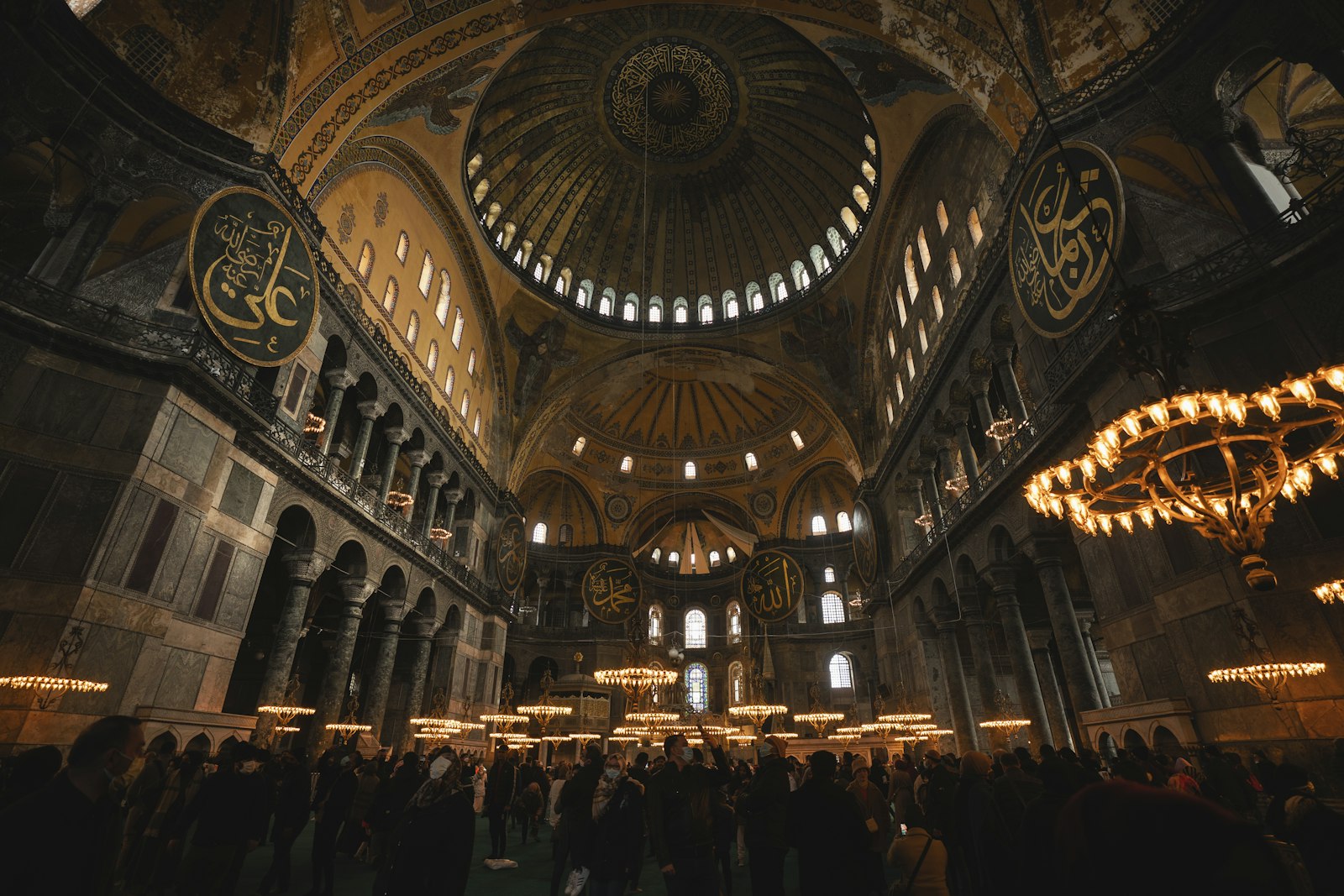
What makes a visit special today is seeing both histories in one space: golden Byzantine mosaics in the upper gallery and giant Ottoman calligraphy panels in the prayer hall below. Few buildings anywhere tell the story of a city so completely.
How to visit
Tickets and entrance
Since January 2024, foreign visitors pay €25 to follow the visitor route through the upper gallery, where the mosaics and the best views over the prayer hall are. The ground-floor prayer hall is reserved for worship and is free for those coming to pray. Children under 8 enter free. City museum passes are not valid here. The tourist entrance is on the eastern side of the building, towards Topkapı Palace, not the main door on Sultanahmet Square.
Dress code
Hagia Sophia is a mosque, so shoulders and knees must be covered and women need to cover their hair. Scarves are sold at the entrance, but bringing your own is easier.
Prayer times
The visitor route closes during Friday midday prayers, roughly 12:30 to 14:30, and can pause briefly at other prayer times. Plan your visit for the morning to avoid both prayer closures and the longest security queues.
What to see
- The great dome: more than 30 metres across and over 50 metres above the floor, best seen from the gallery balcony.
- The Deesis mosaic: a 13th-century masterpiece in the upper gallery, famous for the lifelike faces of its figures.
- The imperial mosaics: golden panels showing Byzantine emperors and empresses, also in the gallery.
- The calligraphy roundels: eight huge medallions bearing the names of God, the Prophet Muhammad and the first caliphs.
- The marble jars: two enormous Hellenistic marble urns added in the Ottoman period.
Istanbul is a short nonstop flight from Amman, and Jordanians don’t need a visa. Compare fares and find the cheapest dates.
Best time to visit
April to June and September to November are the most pleasant months in Istanbul, with mild weather for walking the old city. Winter (December to February) is cold and often rainy, but crowds are smaller. Whatever the season, arrive when the visitor route opens; by late morning, queues for security can be long, especially when cruise ships are in port.
Getting there from Amman and the Gulf
Istanbul has two airports. Nonstop flights from Amman take around two hours and land at Istanbul Airport (IST) or Sabiha Gökçen (SAW) on the Asian side; compare both, as fares can differ a lot. From Istanbul Airport, the Havaist airport bus or a taxi reaches Sultanahmet in about an hour depending on traffic. In the old city, the T1 tram stops at Sultanahmet, a few minutes’ walk from Hagia Sophia. There are also frequent flights to Istanbul from every major Gulf city.
Entry rules for Jordanian travellers
Jordanian passport holders can visit Türkiye without a visa for up to 90 days within any 180-day period. Your passport should be valid for at least six months, and you may be asked for a return or onward ticket. Rules can change, so confirm with the Turkish embassy in Amman or your airline before you fly.
Where to stay
Sultanahmet puts you within walking distance of Hagia Sophia, the Blue Mosque, Topkapı Palace and the Grand Bazaar, and is ideal for a first visit. Sirkeci and Eminönü, a short tram ride away, have good-value hotels near the ferries. For nightlife and restaurants, Karaköy and Beyoğlu across the Golden Horn are popular.
Skip the lines with Istanbul city passes and attraction tickets, and compare hotels near Sultanahmet.
Planning a twin-city trip? Read our guide to Narikala Fortress and Old Tbilisi, a short hop from Istanbul.
FAQ
How much does Hagia Sophia cost to visit?
Foreign visitors pay €25 for the upper gallery route. Worshippers enter the ground-floor prayer hall free, and children under 8 are free.
Can tourists go inside Hagia Sophia?
Yes. Tourists follow a route through the upper gallery, with views down into the prayer hall and close-ups of the Byzantine mosaics.
What should I wear?
Cover your shoulders and knees; women should also cover their hair. Scarves are sold at the entrance.
Is Hagia Sophia open on Fridays?
Yes, but the visitor route closes during Friday midday prayers, roughly 12:30 to 14:30.
Do Jordanians need a visa for Türkiye?
No. Jordanian citizens can stay visa-free for up to 90 days within 180 days.
Prices and opening hours were checked in November 2026 and can change. Always confirm before you travel.
Flixways may earn a commission when you book through links on this page, at no extra cost to you.

Comment (0)